
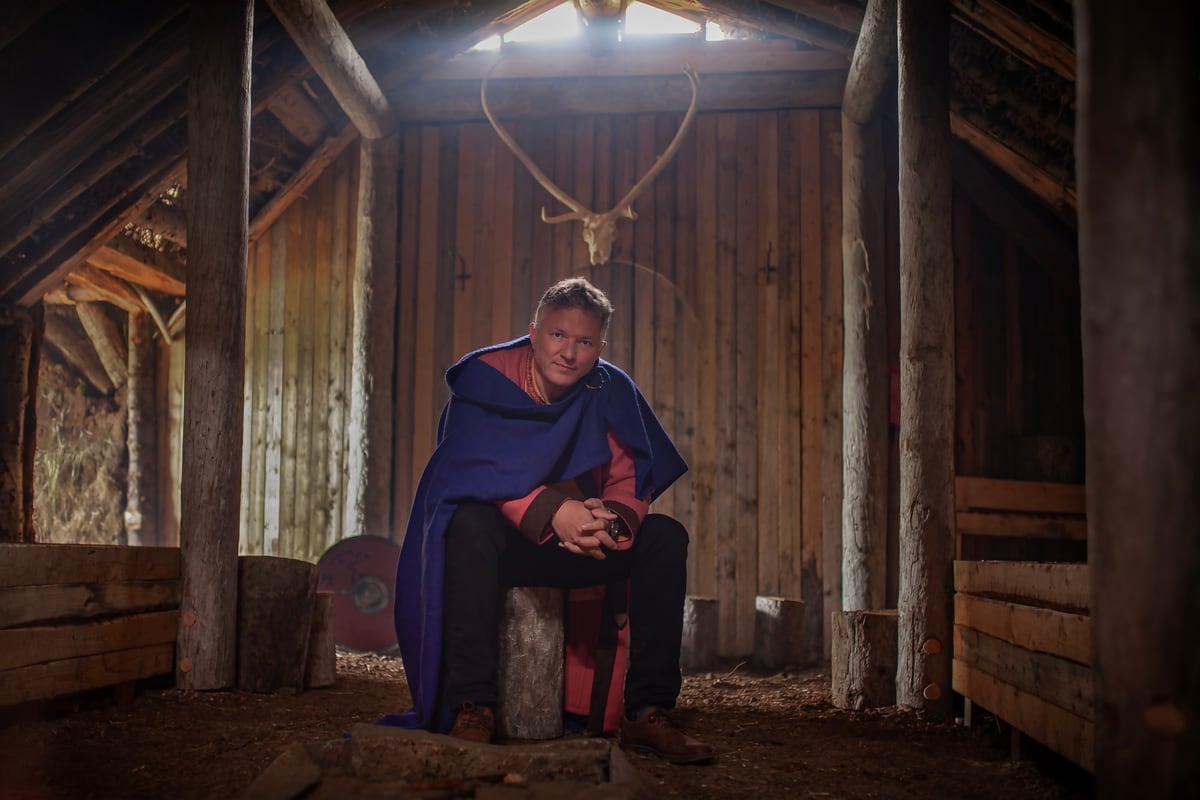
In Botn, at the head of Súgandafjörður, stands a turf and stone house. It was not uncovered by archaeologists. The people of the fjord began building it in 2019, wall by wall, with turf from Botnsdalur and timber brought from two parts of Iceland. They named it after Hallvarður súgandi, whom Landnámabók associates with the settlement of this valley. It is not his house. It is a house about him.
A skáli is a longhouse used as a dwelling during Iceland's settlement period. The building in Botn is a modern reconstruction. No remains of Hallvarður's farmstead have been found there, and the house does not reproduce a structure known to have stood on this exact spot. Its design draws on archaeological research at Grélutóftir near Hrafnseyri, while its name commemorates a figure whom medieval sources associate with the settlement of Súgandafjörður.
What the sources say about Hallvarður
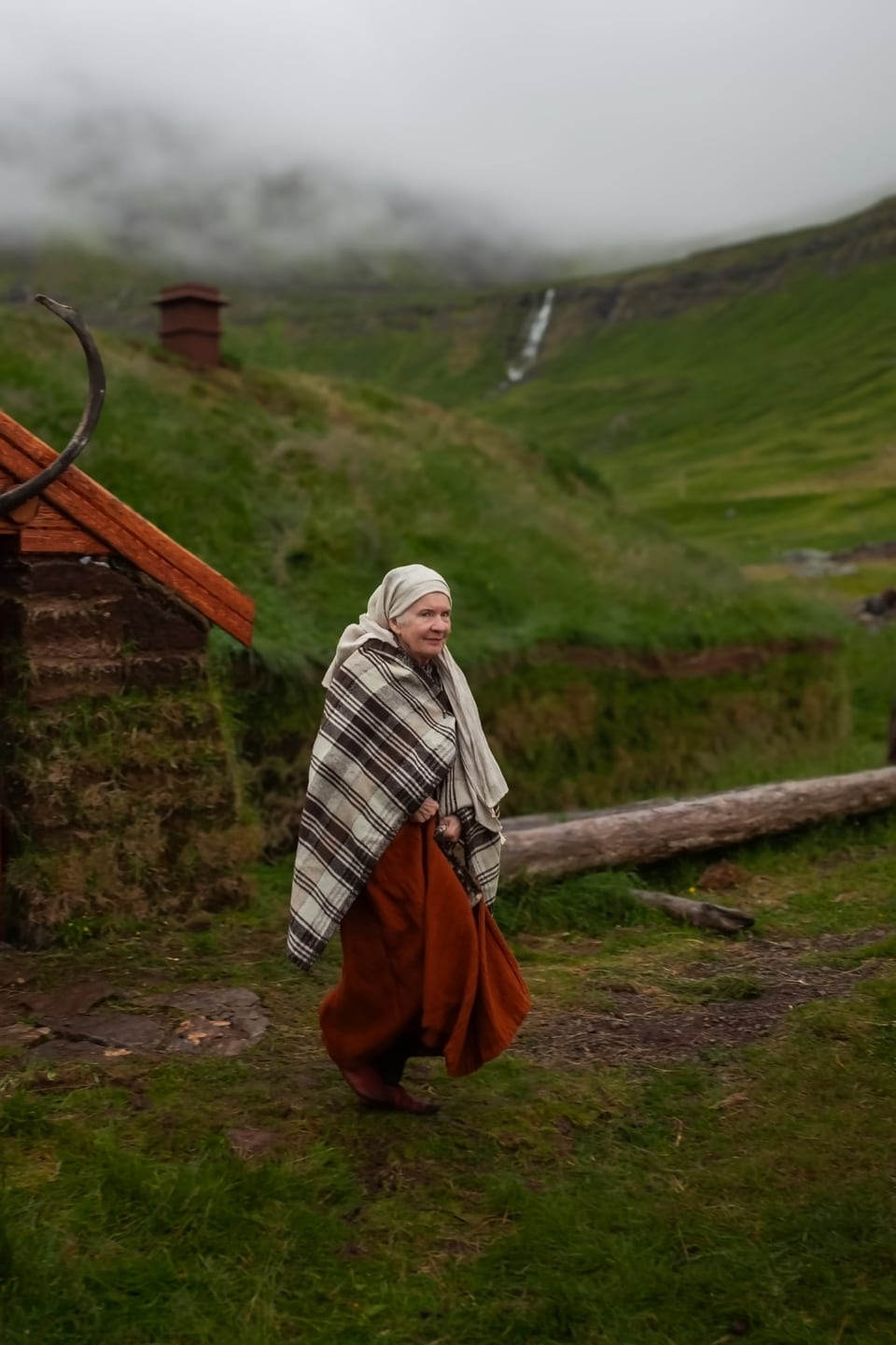
Hallvarður súgandi appears in two medieval sources. Chapter 50 of Landnámabók says that he fought against King Harald at Hafrsfjörður. He then came to Iceland, claimed Súgandafjörður and Skálavík as far as Stigar, and made his home there. The opening chapters of Grettis saga name him among the companions of Önundur, Bálki and Ormur. They describe their expeditions and then Hallvarður's and Bálki's journey to Iceland.
These are important accounts, but they were not written during the settlement of Iceland. Research into Landnámabók shows that its surviving versions took shape several centuries later, around the turn of the thirteenth and fourteenth centuries. The most accurate formulation is therefore that, according to Landnámabók, Hallvarður was a settler in Súgandafjörður. Archaeology does not independently confirm every part of that account.
Even more care is needed when identifying Botn as the exact site of his farmstead. The place name archive of the Árni Magnússon Institute for Icelandic Studies records a local tradition that Hallvarður lived here. It also states that the evidence is too weak to support a firm conclusion. The name of the present house therefore refers to the memory of the fjord, not to the discovery of one person's home.
Archaeology as a starting point
The building draws on Grélutóftir, an archaeological site near the mouth of Hrafnseyrará in Arnarfjörður. In 1977 and 1978, the National Museum of Iceland carried out excavations there under the direction of the archaeologist Guðmundur Ólafsson. The team uncovered a small skáli with an annex, two buildings set into the ground, and remains of structures associated with ironworking and smithing. The skáli itself measured 14 metres by 5 metres.
Using this research, the Argos architecture studio designed a tilgátuhús for Botn. This is an interpretive reconstruction, based on archaeological evidence and on the design decisions needed to turn that evidence into a building. Guðmundur Ólafsson advised the project. Local reports on the construction say that the interior of the new skáli is almost 15 metres long. This does not mean that the two buildings have identical dimensions or details.
Building through shared work
Fornminjafélag Súgandafjarðar began construction in the summer of 2019. The project had been in preparation before then, but that was when work began on site. They built in stages: first the turf and stone walls, then the timber frame and roof, and finally the interior. The plans for the interior included, among other things, sleeping places and a langeldur, or long hearth.
The materials came from several parts of the region and the country. Helga Guðný Kristjánsdóttir and Björn Birkisson of Botn provided turf from Botnsdalur. A later project report lists timber from Tunguskógur near Ísafjörður and driftwood from Hraun on Skagi. The plans also called for the soil beneath the building to be replaced, so that frost would not damage the walls. This was a practical departure from the historical model.
From the beginning, the way of working mattered as well as the result. In August 2019, Kristín Auður Kelddal Elíasdóttir led a workshop on cutting and laying turf and building with stone. At a later stage, Valdimar Elíasson led training on the timber frame and roof, while Sighvatur Dýri helped to find suitable timber. Eyþór Eðvarðsson, chair of Fornminjafélag Súgandafjarðar and the project contact, spoke publicly about the progress of the building over the following years.
This way of working holds the central idea of the skáli. Archaeological knowledge was not left inside a report or on an information panel. It became a starting point for learning about materials, historic building methods and working together. The house recalls Iceland's settlement period, but it also tells the story of a community today that chose to create a place for its local history.
Opening during Act Alone
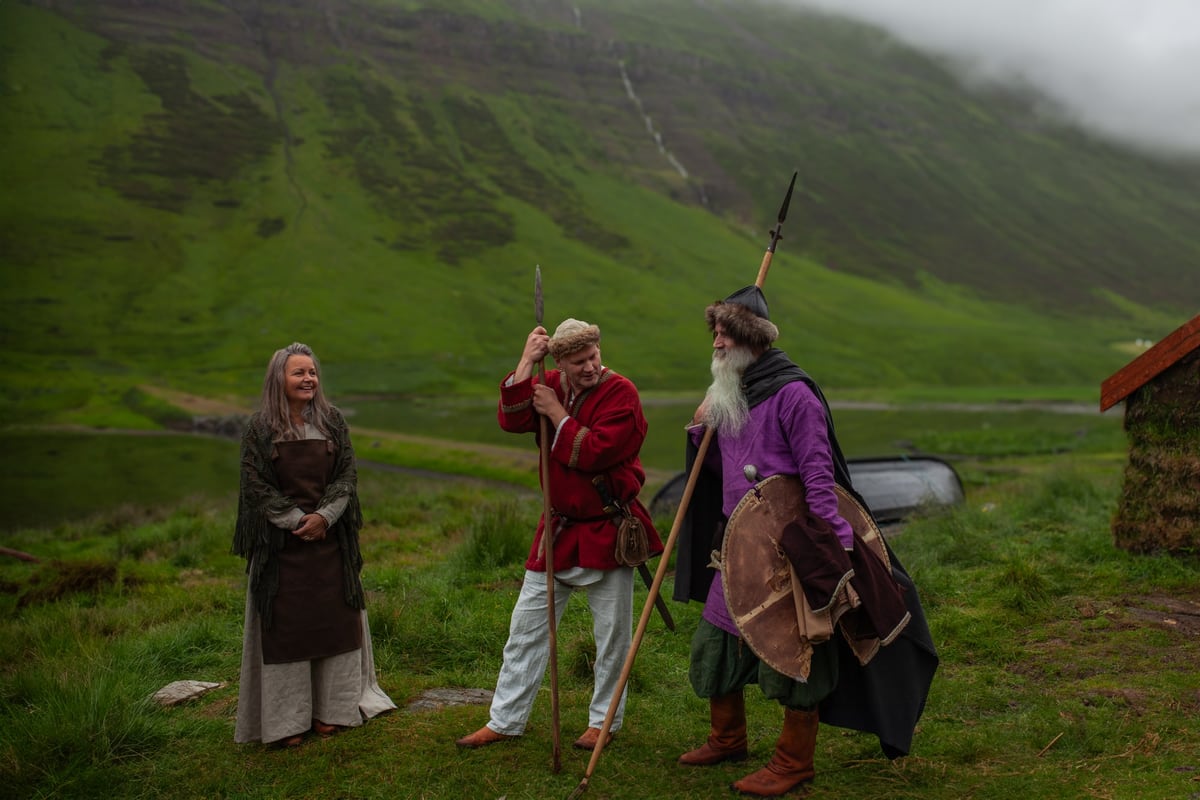
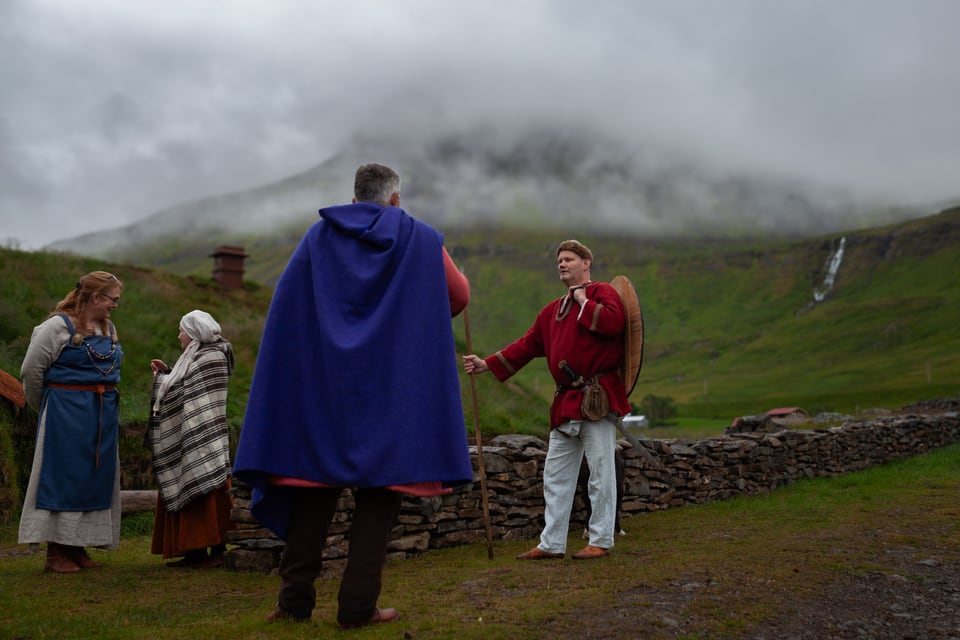
The public opening took place on 10 August 2024 during Vestfirski fornminjadagurinn, a Westfjords heritage day held as part of the twentieth anniversary edition of Act Alone. Eyþór spoke about Hallvarður and the making of the house. The programme also included talks by archaeologists and stories connected with historic sites in the Westfjords. According to one attendee's account, not everyone could fit inside, so part of the audience listened from outside the entrance.
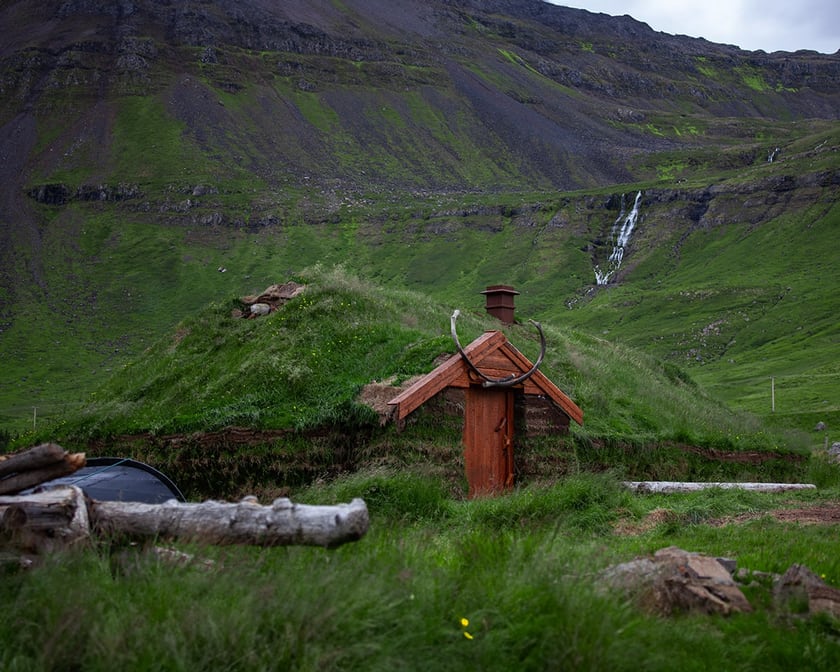
I began my record of that day with two portraits. With so many people present, it was difficult to catch anyone alone in the frame, and portraiture comes more naturally to me than reportage photography. The remaining photographs and the wider story had to wait. Returning to the material is a reminder that history is not only about the past. It is also made when people build a place together, gather there and pass on their knowledge.
The gathering on 8 August 2026
The official Act Alone 2026 programme listed Vestfirski fornminjadagurinn for Saturday 8 August, from 9:01 to 12:01. The times were printed exactly like this in the programme and were not a mistake: Act Alone offsets its times by one minute. The venue was shown only as SH. The programme never expanded the abbreviation, and the speakers and topics for that year's gathering were not published. Admission to every Act Alone event was free.
Planning your visit
Botn lies at the head of Súgandafjörður. From Suðureyri, the road follows the shore of the fjord. The skáli stands in open terrain, so dress for an August morning as you would for a walk in the hills, not a museum visit.
Admission to Act Alone events was free. The official programme gave no information about registration or about the language of the talks.
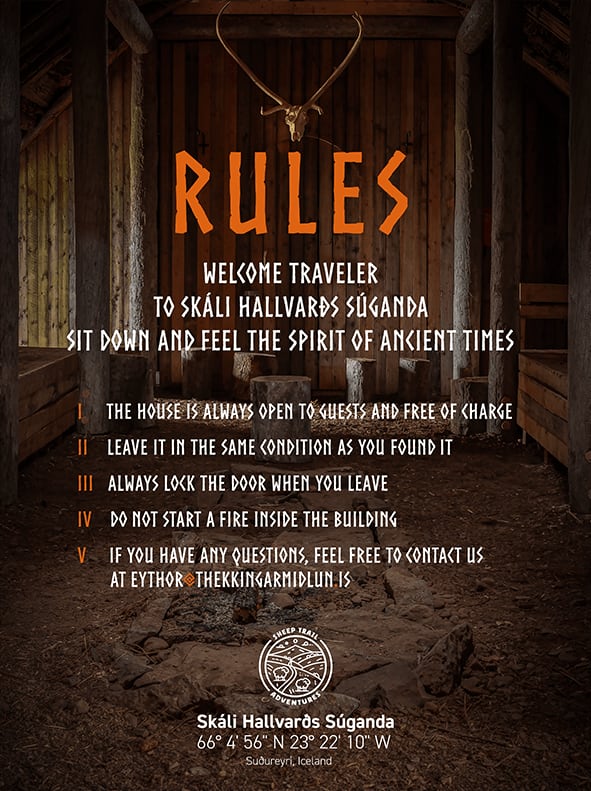
If you visit the skáli outside an event, remember that the place was created through the work and trust of the local community. Visitor rules written in 2024 ask people to leave it as they found it, take everything away with them and not light a fire. Pay attention to any current signs at the site.
Act Alone, the organiser’s website
From the editor: Sheep Trail Adventures will gradually publish more stories, photographs and news from Súgandafjörður. Some of this material was first created in the field, on social media and through our work with Iceland News Polska. We are returning to it, checking the sources again and developing it into longer stories about the places and people of the fjord. This is the first.
Back to news